
Pool Heating in the Algarve: 6 Ways to Swim Longer
An Algarve pool is wonderful in July and August, but the water can feel chilly in spring and autumn. That is where pool heating earns its place. A well-chosen system can extend your swimming season by weeks or months, and a poor choice can leave you with a pool that is still cold and a high electricity bill.
This guide covers six practical ways to heat a swimming pool, from the simplest to the most complete, so you can decide which combination suits your pool, your budget and your plans for the season.
1. Start with a pool cover
Before buying any pool heater, look at how your pool loses heat. Most of it escapes from the surface through evaporation, especially overnight and on windy days. A pool cover cuts that loss dramatically, so it is the cheapest and most effective first step. It also keeps the water cleaner, and it makes every other heating option work better. Whatever system you choose, use a cover when the pool is not in use.
Note: A special solar cover heats up much faster, but more expensive
2. Fit a swimming pool heat pump
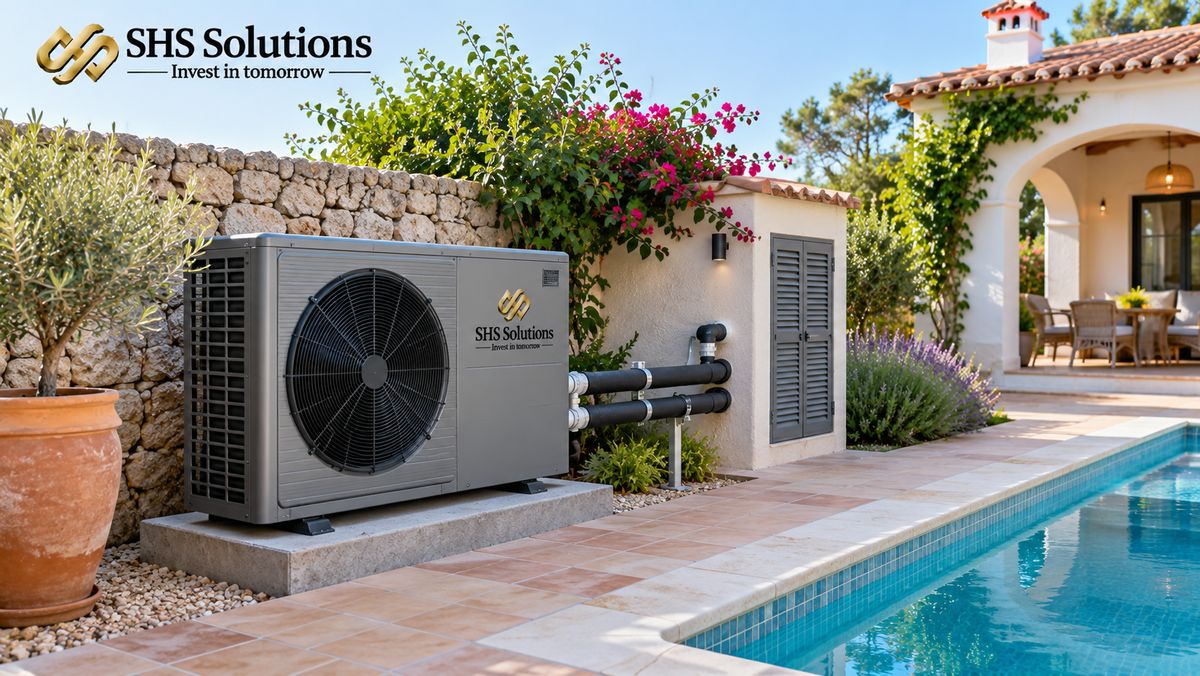
A swimming pool heat pump is the most popular way to heat a pool. It pulls heat from the outside air and transfers it into the pool water as it flows through the unit. Because it moves heat rather than making it from scratch, it is far more efficient than a basic electric heater, and it gives you precise control over the temperature.
Two points to keep in mind. First, a heat pump works best when the air is mild, and its output falls as the air gets colder. Second, it needs to be sized properly for your pool. SHS Solutions can advise on pool heat pump installation as part of our heat pump range.
3. Use solar pool heating
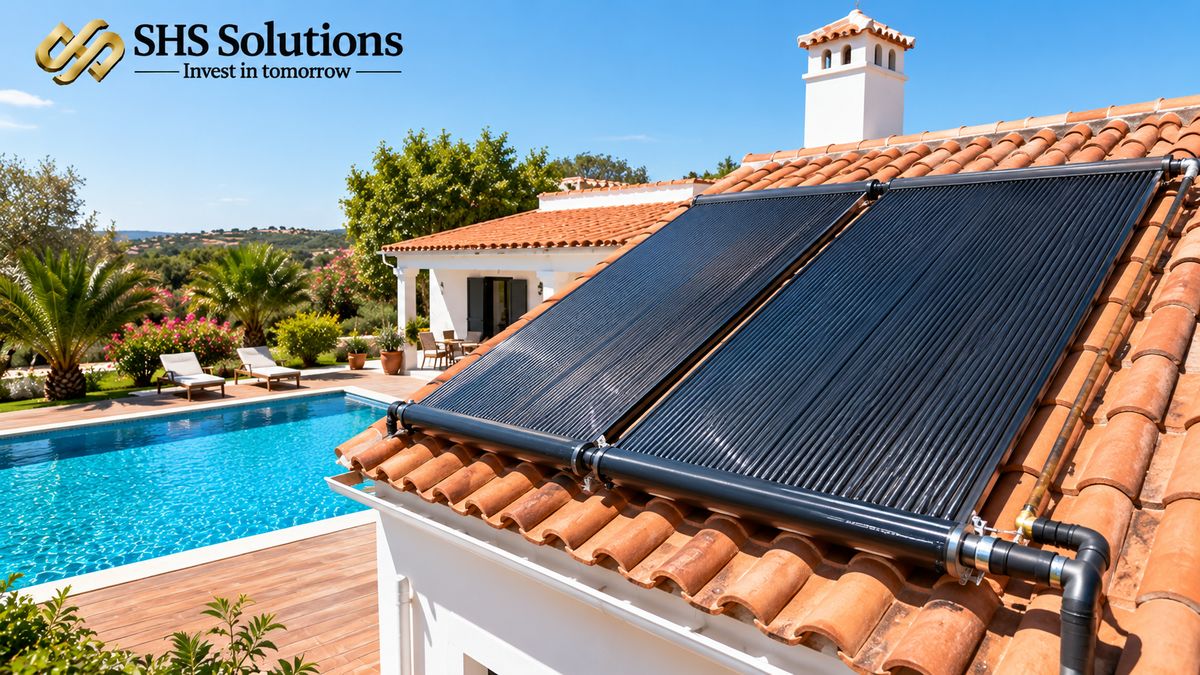
Solar pool heating pumps your pool water through collectors, usually on a roof or a frame, where the sun warms it before it returns to the pool. Running costs are very low, because the heat is free once the system is installed, apart from the circulation pump. The trade-off is that output depends on the weather and the season, so it is best at adding warmth on sunny days and less reliable when you most want heat.
Note: keep in mind it is a much larger investment, and in winter when bad weather they will not help, also in summer they get boiling hot so need to be covered, that is why a heat pump is much more efficient
4. Combine solar panels with a heat pump
One of the best ways to reduce the running cost of a pool heat pump is to power it from your own solar electricity. If you already have solar panels, the heat pump can run during the sunniest hours, when your system is producing the most, so you use your own power instead of buying it from the grid. If you are planning a new solar system anyway, mention your pool when you request a design so the system can be sized with it in mind.
Keep in mind: solar PV will produce less in winter when it is needed for heating
5. Choose the right size
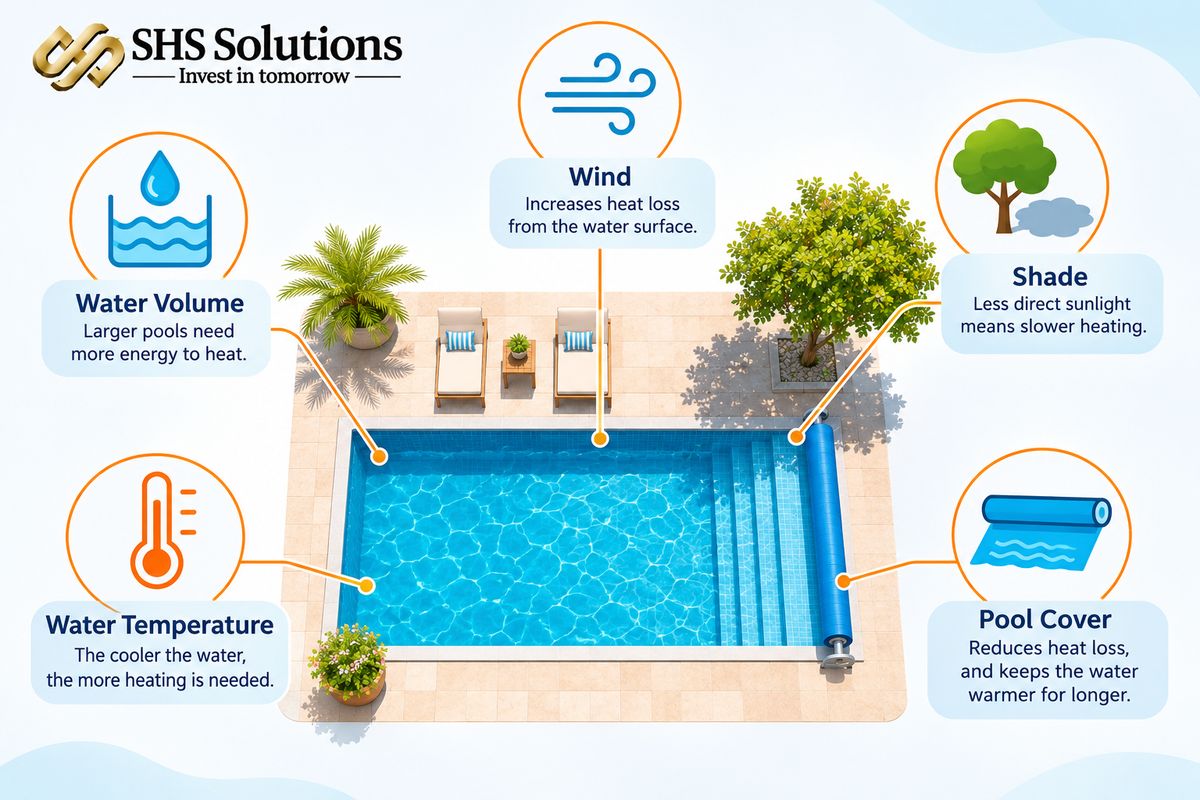
Pool heating systems are sized to the pool, not the house. The main factors are:
- The volume and surface area of the pool
- How exposed it is to wind and shade
- Whether you use a cover
- The water temperature you want
- Which months you want to swim
An undersized heater will take too long to warm the water and may never reach the temperature you want. An oversized one costs more to buy and run than it needs to. A survey of your pool and plant area gives a far better answer than a general rule.
6. Plan your swimming season realistically
Ask yourself when you want to swim, and for how many hours a day. A heated pool in the Algarve can comfortably extend the season into the cooler months, but no system makes a cold, windy day feel like August. Set a target temperature that suits you and your family, and talk to your installer about what is realistic for your pool and exposure. Holiday-let owners should consider how a longer season could affect their bookings.
Which option is right for you?
| Option | Running cost | Control | Works best |
|---|---|---|---|
| Pool cover | None | Keeps heat in | With any system |
| Pool heat pump | Moderate, lower with solar panels | High | Mild weather, extended season |
| Solar pool heating | Very low | Weather-dependent | Sunny days, spring to autumn |
| Combined solar and heat pump | Low | High | Pools in heavy use |
Ready to extend your swimming season? Contact SHS Solutions for advice on pool heating systems, and we will recommend a solution for your pool.
Frequently asked questions
How long does it take to heat a pool?
It depends on the pool volume, the heater capacity, the starting temperature and the weather. Your installer can give you an estimate for your pool.
Is a pool heat pump noisy?
Modern units are designed to be quiet, but the fan does make some sound. Place it away from bedrooms and also to keep away a bit from the terrace if possible discuss the position with your installer.
Can I heat my pool in winter?
You can, but it takes more energy because the air is colder. Many owners heat in spring and autumn only, and a cover helps a great deal.
Can solar panels run my pool heat pump?
Running the pump during sunny hours from your own solar system is one of the best ways to reduce the cost. Tricky, but as a pool needs many hours/days to heat, 50-60.000L heats very slow, so you cannot run a system just a few hours because there is sunshine, it will not do anything, unlike powering the house consumption